Basketball Club Teams San Diego as a Launchpad for Future Success
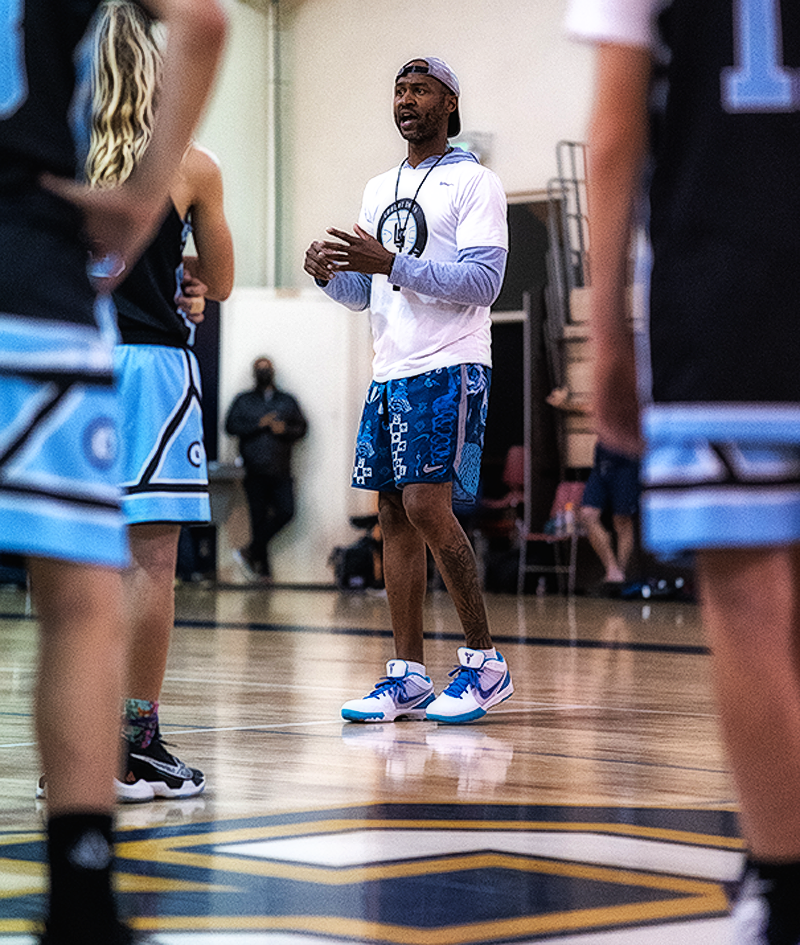
San Diego has long been known for weather, coastline, and a laid-back pace that appeals to families. What often gets overlooked is how strong the area can be for youth basketball development when a family chooses the right environment. For serious players, Basketball Club Teams San Diego can serve as far more than a place to get extra games on weekends. The right club becomes a training ground for discipline, decision-making, resilience, and exposure to higher standards. For many young athletes, that combination changes the trajectory of high school careers, college opportunities, and even professional ambitions.
That does not mean every club team is automatically a smart investment. I have seen families spend a great deal of money chasing logos, promises, and tournament schedules that looked impressive on paper but did little to develop the player. I have also seen lesser-known programs produce tougher, more skilled, more coachable athletes because they emphasized footwork, accountability, and game understanding over marketing. The difference matters.
When people talk about club basketball, they often reduce the conversation to recruiting. That is too narrow. Recruiting is one possible outcome. Real player development is the foundation. In San Diego, where the basketball scene sits within reach of Los Angeles, Orange County, Inland Empire, Arizona, and Nevada events, club basketball can open doors. But the athletes who benefit most are usually the ones who use club play as a structured extension of training, not as a substitute for it.
Why San Diego creates a unique basketball environment
San Diego sits in a useful middle ground. It is not a tiny market where advanced players struggle to find competition, and it is not so oversized that athletes disappear unless they already have a national profile. That balance can work in a player’s favor.
A motivated athlete in this region can train year-round, compete against strong local talent, and travel to meaningful tournaments without the same logistical burden families face in more isolated areas. Access matters. When a player can get quality repetitions during the week and face tougher competition on weekends, growth tends to accelerate. Small weaknesses get exposed faster. Good habits either take root or fall apart under pressure.
The climate also plays an understated role. Fewer weather disruptions mean more consistent development. That sounds minor until you compare one player who gets steady weekly work across most of the year with another whose training schedule is frequently interrupted. Skill gains often come from boring consistency. Ten extra months of stable reps in shooting, ball handling, closeouts, and live reads can matter more than a flashy tournament run.
Another advantage is the diversity of playing styles in the region. San Diego teams often face opponents with different tempos, physical profiles, and tactical approaches. Some teams pressure full court. Some spread the floor and shoot. Others play through size and half-court execution. That variety helps players develop adaptability, which is one of the clearest separators as competition rises.
The right club team teaches more than basketball
A good club team should improve a jumper, tighten a handle, and sharpen defensive positioning. That is expected. The deeper value comes from what happens around those skills.
Young players learn how to accept coaching without taking correction personally. They learn that talent does not excuse poor transition defense. They learn how to prepare for early morning games, long tournament days, and the emotional swing of winning one game and getting exposed in the next. Those experiences build habits that transfer far beyond the court.
I remember watching a guard, probably fourteen at the time, who had obvious scoring ability but weak body language. Every missed call turned into a complaint. Every turnover became someone else’s fault. Midway through the spring season, his club coach reduced his minutes during a close game, not because he lacked skill, but because his reactions were hurting the group. A few months later, the same player had changed. He huddled first, defended harder, and stopped looking at referees after every drive. By high school season, his school coach trusted him in late-game situations. The jump was not about dribble moves. It was about maturity.
That pattern shows up often. Basketball reveals character quickly. Club environments, especially competitive ones, can help shape it if the coaching is honest and the standards are clear.
Development first, exposure second
Families often ask the wrong question at the beginning. They ask, “Which team gets the most college coaches?” A better question is, “Which team will make this player substantially better over the next twelve months?”
Exposure without readiness wastes everybody’s time. College coaches, whether they are Division I, Division II, Division III, NAIA, or junior college staff, can spot the difference between production and polish. They are not only watching points per game. They are watching pace, spacing awareness, defensive effort, communication, and whether a player can handle physicality without losing efficiency.
San Diego club teams can provide useful visibility because they travel into strong event circuits and often play against respected programs from larger markets. Still, the athletes who stand out are usually not the ones trying hardest to get noticed. They are the ones who make winning plays repeatedly. They sprint back. They rotate on time. They make the extra pass. They shoot with confidence and mechanics that hold up in game speed. They defend without needing constant reminders.
For younger players, especially middle school athletes, heavy exposure talk can actually be distracting. A sixth, seventh, or eighth grader does not need a recruiting strategy. That player needs movement quality, foundational skill work, and an environment that teaches how to compete without skipping development stages. The launchpad works only if the runway is built correctly.
What separates strong Basketball Club Teams San Diego from weak ones
Parents can get dazzled by uniforms, social media videos, and promises of elite competition. Those things may have some value, but they are not reliable indicators of a strong developmental setting. The best programs usually reveal themselves in quieter ways.
A strong club has coaches who can teach details, not just supervise scrimmages. They correct foot placement on closeouts. They demand the right angle on a ball screen. They know when a player needs more freedom and when that player needs simpler reads. They communicate clearly with families about roles, expectations, and schedule demands. Most importantly, they have a coherent philosophy. Their practices are building toward something.
Weak programs often lean too heavily on tournament volume. They collect fees, enter events, and assume the games themselves will develop the players. Games are useful, but they are diagnostic. Practice is where real growth happens. A team that plays five games in a weekend but barely trains in between can leave athletes busy without making them better.
There is also a cultural difference you can feel in the gym. In strong programs, players compete hard without drifting into chaos. Teammates hold each other accountable. Coaches teach rather than merely react. Parents understand boundaries. In weaker settings, the sidelines become loud, roles become murky, and development turns into a race for touches.
How club basketball prepares athletes for high school success
One of the clearest benefits of club basketball is readiness for the speed and physicality of high school play. Athletes who spend off-seasons facing strong peers tend to enter school tryouts with less shock. They have seen traps, length, pressure defense, and opponents who punish weak decisions. That matters.
High school coaches notice players who already understand spacing and timing. They notice players who can guard the ball without reaching, who know how to tag a roller, who relocate after passing, and who communicate early. Club ball, when coached well, can accelerate those habits.
For players on the edge of making varsity, that advantage can be decisive. The gap between the last player cut and the last player kept is often not dramatic talent. It is reliability. Can the player defend a scheme? Can the player handle pressure? Can the player absorb coaching quickly? Club environments expose athletes to those demands earlier.
San Diego players also benefit from seeing a wider standard. A local high school gym can feel like the entire universe to a young athlete until club travel changes the frame. Then that same player sees bigger guards, quicker wings, and more disciplined teams from outside the area. If approached the right way, that is not discouraging. It is clarifying. It tells the athlete what must improve.
The recruiting piece, without the fantasy
It is reasonable for families to think about college basketball. It becomes unreasonable when every decision is driven by the hope of a scholarship. The numbers are tight, roster spots are https://daltonexgk020.opalvector.com/posts/top-basketball-club-teams-in-san-diego-to-watch-this-season limited, and player fit matters as much as raw talent. Club basketball can help, but it should be understood realistically.
A club team can create opportunities in several ways. It puts players in front of better competition. It gives coaches game film against meaningful opponents. It can place athletes in tournaments where college staff are already present. It can connect families with experienced coaches who understand timelines and level fit.
What it cannot do is magically turn an undeveloped player into a recruit.
The players who gain traction in recruiting usually have a few things in place by the time serious attention begins: a clear positional identity, translatable strengths, decent academic standing, and film that shows consistent impact. A six-foot guard who scores twenty points against weak local competition may not draw interest if the film shows poor decision-making and no defensive value. A lower-scoring wing who defends three positions, rebounds, shoots the corner three, and moves the ball quickly may attract more attention because the role translates.
Families in San Diego sometimes compare themselves directly with prospects from bigger basketball markets and assume they need to chase every event possible. That is not always true. Selective visibility combined with strong film and honest evaluation is often more effective than nonstop travel. More weekends on the road do not automatically equal more opportunity.
The practical costs, and whether they are worth it
Club basketball is a significant family commitment. That includes direct costs like team fees, uniforms, tournament entry, travel, and training. It also includes less obvious costs, such as time, recovery strain, and the possibility of overuse if the schedule is poorly managed.
For some families, the expense is justified because the environment fits the athlete and the developmental return is obvious. For others, private skill training, school basketball, and a lighter competition calendar may make more sense. Not every player needs the same path.
The smartest parents I have seen are neither cynical nor starry-eyed. They ask practical questions. How many quality practices are included? Who actually coaches the team at tournaments? How are minutes handled? What is the team’s plan for development by age group? How much travel is truly necessary? What happens if a player needs to work through a weakness rather than hide it?
Those answers reveal a lot.
Here are a few signs that a club situation is worth serious consideration:
- Practices are organized around teaching, not just running.
- Coaches can explain player roles and developmental goals clearly.
- Competition level matches the athlete’s current stage, with room to stretch.
- The program values academics, behavior, and long-term growth.
- Families can observe a stable culture rather than constant drama.
If those elements are missing, the logo probably will not save the experience.
Matching the player to the right level
One common mistake is joining the most branded or most hyped team available, regardless of fit. That can backfire. A player buried at the end of a loaded roster may gain practice reps, but if the athlete is so overmatched that confidence erodes and live development stalls, the situation may not serve the long-term plan. On the other hand, staying on a team that is too weak can allow bad habits to harden.
Fit depends on age, maturity, role, and development needs. A younger player might benefit from being slightly challenged but still involved. An older player seeking college opportunities may need a roster and schedule that provide tougher competition and credible exposure windows. Some athletes need a coach who will demand toughness. Others need one who can slow the game down and build decision-making.
There is no universal formula. The right question is not, “What is the best team?” It is, “What is the best environment for this player, right now, given where the player needs to be next year?”
That answer can change. Good families reassess honestly, not emotionally.
When club basketball goes wrong
Club basketball can absolutely become counterproductive. Over-scheduling is one of the biggest problems. A player who practices with school, trains privately, lifts, and then plays every weekend for months can slide into fatigue without recognizing it. The first signs are often subtle: a jumper that comes up short, unusual irritability, heavy legs on defense, or a drop in enthusiasm.
Role confusion can be another issue. Some players spend club season being told to create constantly, then return to school ball where they need to defend, cut, and space as complementary pieces. If coaches are not communicating the bigger picture, players can develop distorted views of their game.
Parent behavior also matters more than many people admit. I have seen strong club environments get undermined by constant sideline coaching, postgame interrogation, and social comparison. A player who feels every possession is being judged by a parent becomes tight. Tight players do not develop freely. They play to avoid mistakes instead of learning through them.
The healthiest club situations set boundaries. Coaches coach. Players play. Parents support.
Habits that carry into college and adult life
Even for athletes who never play beyond high school, club basketball can provide durable benefits. The best programs teach time management because the schedule demands it. They teach recovery habits because players feel the difference between preparation and neglect. They teach interpersonal skills because teammates come from different schools, neighborhoods, and backgrounds.
A teenager who learns to be on time, accept a role, handle adversity, and prepare seriously is gaining more than court skills. Those habits show up later in college classes, jobs, and relationships. Sports do not guarantee character, but they create frequent chances to build it.
I have known former club players who did not become college athletes yet still credit those years with shaping how they work today. They learned how to deal with pressure, how to collaborate, and how to stay composed when plans changed. Those are not soft benefits. They are highly practical ones.
What families should look for before committing
The smartest approach is to evaluate a club team the way you would evaluate a school or a serious mentor. Watch a practice if possible. Do not just watch a game. Games can hide a lot. Practice reveals the actual standard.
Pay attention to how coaches correct mistakes. Are they specific? Do players understand the teaching points? Is there energy without chaos? Are weaker players ignored, or developed? Notice whether athletes improve over time, not just whether the team wins. At younger ages in particular, a polished zone defense and a dominant early maturer can create wins that say very little about real development.
Families should also ask a few grounded questions before joining:
- How often do you practice, and what does a typical practice emphasize?
- What is the expected travel load across the season?
- How do you handle playing time and role development?
- What support do players receive regarding film, feedback, or recruiting guidance?
- How do you communicate with parents when issues arise?
Clear answers usually indicate a healthier program. Vague answers usually indicate future frustration.
San Diego as a starting point, not a ceiling
The best view of Basketball Club Teams San Diego is neither romantic nor skeptical. San Diego is not automatically a fast track, and it is not a basketball backwater either. It is a strong developmental market for players who approach it with clarity.
A well-run club team in this region can expose a young athlete to better competition, stronger habits, and a broader sense of what serious basketball requires. It can prepare that athlete for high school varsity minutes, help create college options, and build traits that matter long after the last game. But those outcomes depend on fit, coaching quality, and family judgment.
The launchpad idea is useful because it captures the real purpose. A launchpad is not the destination. It is the structure that supports takeoff. For a young basketball player in San Diego, the right club team can be exactly that, a place where skill sharpens, confidence gets tested, standards rise, and future possibilities become more tangible.
What matters most is not the promise. It is the daily work inside the gym, the honesty of the coaching, and the willingness of the player to be shaped by the process. When those pieces line up, the results can reach much further than a tournament medal or a social media highlight. They can set the course for years.
Lamont Smith Basketball Academy
888 Clairemont Mesa Blvd Suite T-2, San Diego, CA 92123
(619) 639-8778
FAQ About Basketball Club Teams San Diego
How can a player join an LSBA club team?
Players are evaluated during practices so the coaching staff can recommend an appropriate team and development level. Families should contact the academy to confirm current openings and evaluation details.
Are club teams available for newer basketball players?
Yes. LSBA describes multiple levels, including a developmental option for newer players as well as more competitive teams for athletes with prior club experience.
What do LSBA club team practices emphasize?
Practices emphasize basketball fundamentals, team defense, structure, communication, and player development. The specific focus may vary according to the team and experience level.
Do all LSBA teams travel?
Travel expectations vary by level. Some teams focus on local competition, while advanced teams may participate in tournaments elsewhere in Southern California or beyond. Families should confirm the current schedule before enrolling.